
Hosting a Diwali Card Party: Games, Setup, and Decks for a Big Table
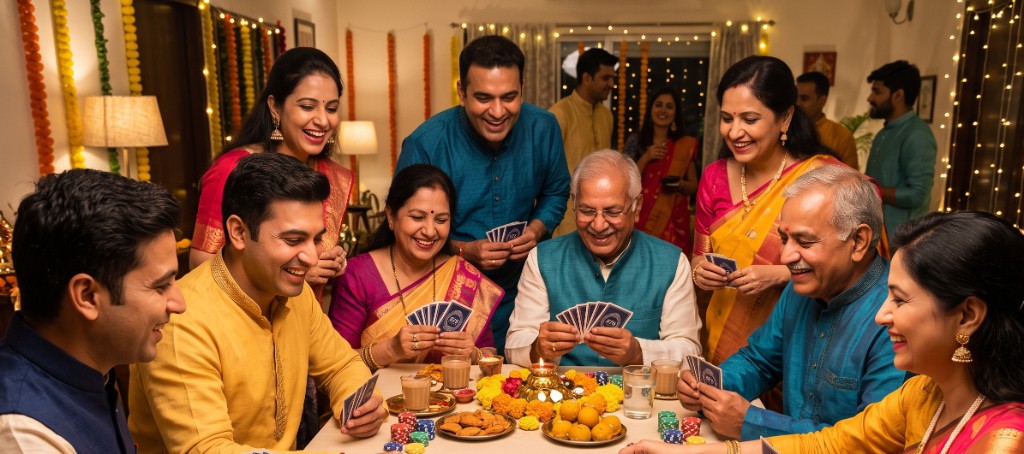
For many families, Diwali means diyas, sweets, and a night of cards. Playing cards at Diwali is a long-standing custom across India, and a bigger gathering brings its own questions: which games work with eight or ten people, how many decks you need, and how to keep cards usable when there are sweets and snacks on the table. This guide covers the games, the setup, and the deck count for a big table, and keeps the focus on friendly, low-stakes play.
A note on playing responsibly
Play for fun. Use points, tokens, chocolates, or bragging rights instead of money. Rules about gambling vary by state in India, so keep the stakes symbolic, make sure everyone at the table is comfortable, and let anyone sit out without comment. A good party game is one the whole room wants to join.
Games that work at a big table
Teen patti
The Diwali favourite. Each player gets three cards, and a betting round decides who shows. A single 52-card deck handles a table of up to about seven comfortably. Hand ranking, from highest, is trail (three of a kind), pure sequence, sequence, colour, pair, and high card. Use chips or tokens for stakes.
13-card Indian rummy
Rummy suits a table of two to six with two decks, and each deal can be played at its own pace, so people can leave and rejoin. Our 13-card rules guide covers the basics, and 13-card vs 21-card rummy helps you pick the format for your group.
Court piece (rang) and Mendikot
These partnership trick-taking games are played with four players in two teams. They give a four-person sub-table something structured to do while teen patti runs next to it, and they are a good fit for older family members who prefer a game they have played for years.
Cheat (bluff)
For a mixed-age crowd, Cheat is easy to explain and loud in a good way. Players discard face down, naming a rank, and anyone can challenge. It scales to a large group with one or two decks and needs no counting or scoring.
More options for family tables are in card games for family game night.
How many decks do you need?
A simple rule: one deck per game plus one spare. Then add decks for rummy, which uses two.
- One teen patti table — 1 deck, plus 1 spare
- One rummy table — 2 decks (a twin pack is made for this), plus a spare pair if you can
- Two or three tables running at once — add the numbers up and keep a sealed deck in reserve for when one gets damp or sticky
- Matching backs — for rummy, use decks with different back colours so the two packs can be separated after play
Buying in sets saves effort. The multi-pack range includes the Nylon Poker plastic 6-pack, which covers several tables in one order.
Paper or plastic for a Diwali table?
Diwali tables come with sweets, fried snacks, and drinks, and cards pick up oil and sugar quickly. That makes waterproof plastic decks the practical choice for the main tables: they wipe clean and survive spills. Paper decks are still a good pick for a smaller, tidier table where the crisp feel matters more. The full comparison is in plastic vs paper playing cards.
Setting up the room
- Keep flames away from the cards. Diyas, candles, and lamps look beautiful, but paper cards, tablecloths, and sleeves burn. Put them on a separate shelf or on the edge of the room, never on the card table.
- Separate food from play. Serve snacks on trays or a side table, and have napkins and wipes within reach. Oily fingers mark cards, and marks become tells.
- Good light. A warm overhead light or a lamp beside the table keeps faces and indices readable without glare.
- Cover the table. A felt or thick cloth makes dealing and shuffling easier and protects the surface.
- Plan seating. Four to six per table plays best. Keep a few chairs free for people to rotate in and out.
- Keep a scorekeeper. A notepad and a pen per table settles disputes before they start.
A simple evening plan
- Welcome and settle in. Sweets first, cards later, so hands are clean when play begins.
- Warm-up round. Start with an easy game such as Cheat so everyone, children included, joins in.
- Main tables. Split into teen patti, rummy, and a partnership game. Rotate players between tables each hour.
- Fresh deck mid-evening. Swap in a sealed deck once the first one gets soft or sticky. The difference at the table is noticeable.
- Close with something quieter. A two-player or small-group game, or a few of the card tricks for the children, winds the night down.
Afterwards
Wipe plastic decks with a slightly damp cloth, dry them, and store them in their tuck boxes. Retire paper decks that have gone soft, and check the shine on corners; the signs are covered in our card-care guide. If your family plays cards through the festive season and beyond, a prepaid subscription keeps fresh decks arriving, and the Diwali pack can become a regular habit rather than a one-off.
Happy Diwali, and happy playing.