
How Poker Cards Are Made: From Cardstock to Tuck Box
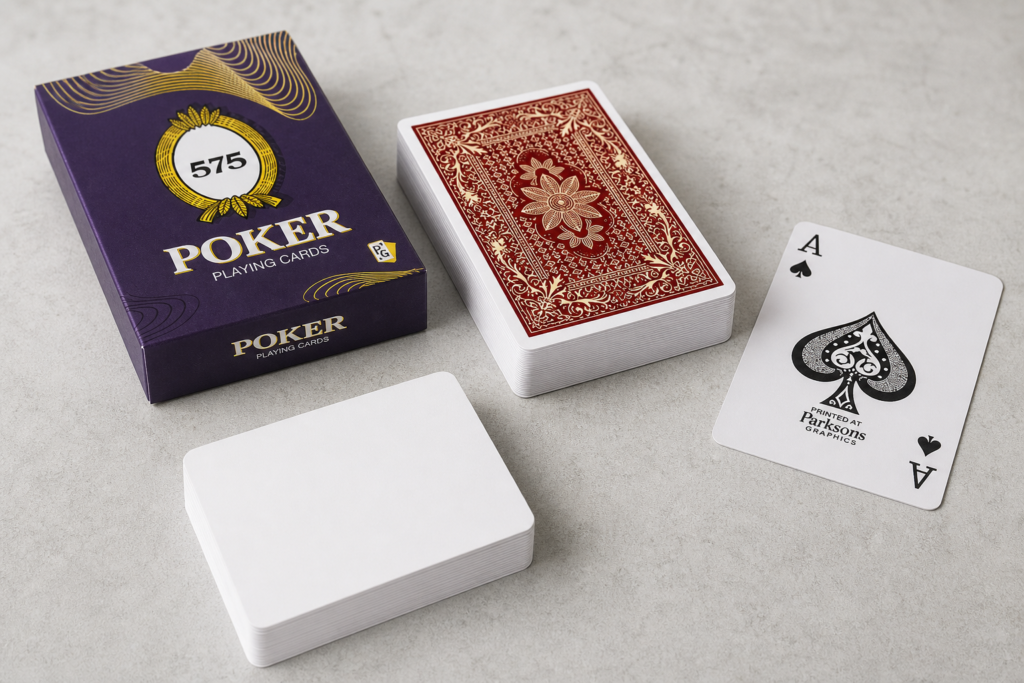
A deck of poker cards looks simple: fifty-two rectangles, four colours, one glossy tuck box. Behind that calm surface is a chain of printing, coating, cutting, and quality checks refined over centuries—from hand-painted courts to high-speed presses. Understanding how cards are made explains why two decks at the same price can feel worlds apart after ten shuffles.
Step 1: Cardstock and composition
Everything starts with stock. Paper playing cards use layered pasteboard—multiple plies bonded for stiffness—with a target caliper (thickness) usually around 0.30–0.32 mm for poker size. Premium makers add linen or air-cushion embossing on the back to trap air between cards so they slide instead of clumping.
Plastic and nylon decks skip wood pulp entirely. They begin as extruded or laminated polymer sheets cut to the same poker or bridge dimensions. The goal is uniform stiffness, moisture resistance, and a life measured in months of daily deals rather than dozens.
Step 2: Printing the faces and backs
Modern card faces are printed offset or digitally in precise registration so pips line up with borders and corner indices. Each sheet carries dozens of cards arranged in a print layout—a grid that maximises paper use and keeps colour consistent across the run.
- Face cards — kings, queens, and jacks from standard art files or custom illustrations; double-ended designs print once and read upright either way
- Pips and indices — rank and suit in corners so players can fan hands without flashing the full card
- Backs — often printed in a separate pass; symmetry matters so no card is identifiable from the back pattern
- Jokers and ad cards — added to the layout or inserted after cutting
Step 3: Coating and finish
Raw printed stock is fragile. A coating—varnish, aqueous seal, or polymer layer—protects ink and controls slide. Casino-grade paper cards often use a linen finish that players describe as “snap.” Plastic decks may be fully laminated so the card is effectively one waterproof unit.
Finish choice affects cardistry, magic, and dealing speed. Too much gloss and cards skate; too little and they stick in humidity. Manufacturers tune this per product line—poker room decks versus souvenir packs versus durable nylon ranges.
Step 4: Cutting, rounding, and sorting
Large sheets are cut into individual cards on guillotine or die-cutting lines. Poker size (≈ 63 × 88 mm) and bridge size (≈ 57 × 89 mm) must hit tight tolerances so any deck can be swapped into a casino shoe or a home game without noticeable size drift.
- Corner radius — rounded corners reduce fraying and feel familiar in the hand
- Edge smoothness — burrs cause clumping; premium lines deburr or seal edges
- Collating — automated systems gather 52 cards plus jokers in suit order or random order per batch
Step 5: Quality control and packaging
Before sealing, lines check for colour drift, mis-registration, blank faces, and duplicate cards. Random samples bend, riffle, and measure caliper. Reputable factories—such as Parksons Graphics, which has produced playing cards for decades including the 575 range—treat consistency as a safety issue: a marked or mis-cut deck destroys trust at the table.
Finished decks go into tuck boxes (paperboard shells) or plastic cases, sometimes with gold foil, embossing, or seal bands. Cellophane wrap keeps humidity out until the customer breaks the seal—that first crisp fan is the factory’s last advertisement.
Why manufacturing details matter at home
Players feel manufacturing choices even when they cannot name them:
- Stiff stock holds shape during overhand shuffles and chip riffles
- Clean registration means no blurry pips that slow reads at showdown
- Durable coating delays the “shiny corner” tell that ends a deck’s fair-life
- Correct size lets you use cut cards and dealing shoes without jamming
When you compare plastic versus paper, you are really comparing two manufacturing paths—pulp and press versus polymer and laminate—both trying to reach the same goal: a fair, readable, shuffleable card for thousands of hands.
From factory floor to your poker night
Next time you open a fresh deck, you are holding a small manufacturing success: registered colour, measured caliper, rounded corners, and a box that survived shipping. Whether you choose paper for a casual evening or 575 Nylon Playing Cards for a deck that must outlast the season, the making of the card is what lets the game be about skill and luck—not warped stock or smeared ink.