
Texas Hold’em for Beginners: Blinds, Streets, and Your First Hand
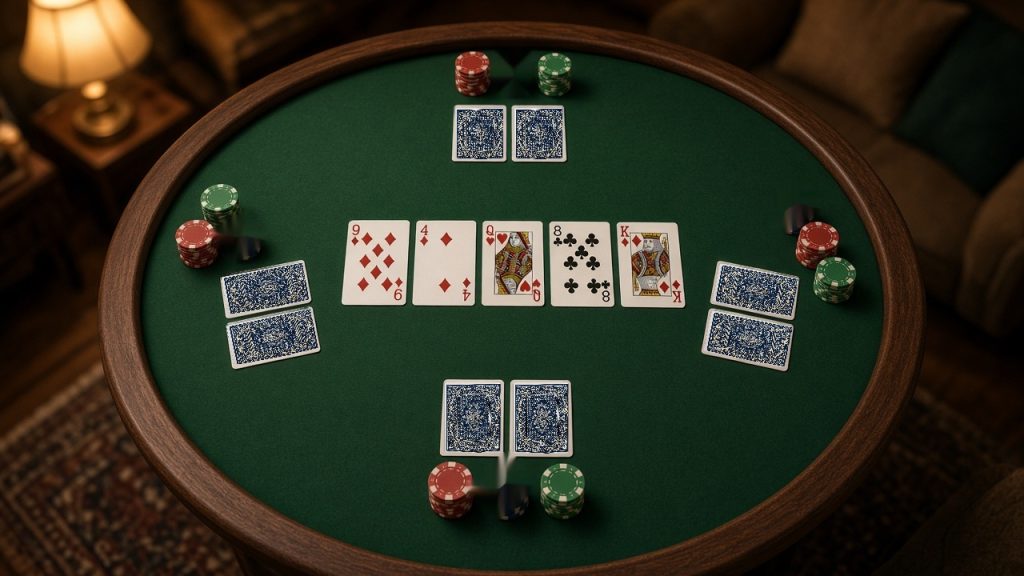
Texas Hold’em looks complicated until you see one hand played slowly. There are two private cards, five shared cards, and four rounds of betting. Once you know what happens on each street, the rest is vocabulary. This guide walks through blinds, the flop, turn, and river, and how a pot is won—enough to deal a friendly home game. When someone asks “does my hand beat theirs?”, send them to our poker hand rankings chart. For chips, buy-ins, and seating, pair this with hosting a poker night.
What you need
- 2–10 players; 6–8 is ideal at home.
- One standard 52-card deck—poker size is usual. The 575 Poker deck is made for this shape; plastic Nylon Poker suits tables near drinks.
- Chips or counters for betting (even coloured sweets work for a tiny-stakes night).
- Dealer button—any coin marks who acts last on each street.
Blinds and the button
Hold’em has forced bets so every pot has something in it.
- The player left of the dealer posts the small blind (half a minimum bet).
- The next player posts the big blind (a full minimum bet).
- The button moves one seat clockwise after each hand so blinds rotate fairly.
Example: blinds of 10 and 20 means the small blind puts 10, the big blind 20, and most calls are 20 to start.
One hand, step by step
1. Hole cards
Each player gets two face-down cards. Only you may look at yours.
2. Pre-flop betting
Starting left of the big blind, each player may fold (drop out), call (match the big blind), or raise (increase the bet). Action continues until everyone still in has put the same amount in.
3. The flop
Three community cards are dealt face-up in the middle. Another betting round runs starting from the first active player left of the button. Players may check (pass if no bet is facing them), bet, call, raise, or fold.
4. The turn
A fourth community card is dealt. Bet again in the same order.
5. The river
The fifth and final community card is dealt. Last betting round.
6. Showdown
If more than one player remains, hands are shown. Each person makes the best five-card hand from their two hole cards plus the five board cards (you may use both, one, or neither hole card). Highest ranking hand wins the pot; ties split it. Use the rankings post if there is a dispute.
Actions in plain language
- Fold: give up the hand and any chips you already committed.
- Check: stay in without adding chips, only when no bet is required.
- Call: match the current bet.
- Raise: increase the bet; others must call the new amount or fold.
- All-in: bet every chip you have left; side pots can form—keep a host nearby for the math.
Beginner mistakes (and easy fixes)
- Playing every hand. Fold most starting cards; play tighter until you recognise strength.
- Forgetting the board. The best hand might be entirely on the table; your hole cards might not matter.
- Calling too much. Calling is not safer than raising—often it is how stacks bleed away.
- Skipping the shuffle. Deal from a properly mixed deck; seven riffles is a fair target per our shuffle guide.
Home stakes that stay friendly
Pick blinds so a buy-in lasts the evening. Write buy-in and rebuy rules on a card by the chip tray. Stop when the quietest player has had enough—poker is still a card game, not a job.
Decks that survive poker night
Poker size, crisp corners, and a back that is easy to tell from a rummy deck on the same shelf. Paper 575 Poker shuffles beautifully for a monthly game; heavy weekly hosts often keep Nylon Poker plastic in a six-pack so a worn deck can rotate out without stopping play. Compare materials in plastic vs paper, and stock extras with a subscription if you never want to pause for a dead pack.