
Canasta Basics: Partnership Melds, Wild Cards, and Going Out
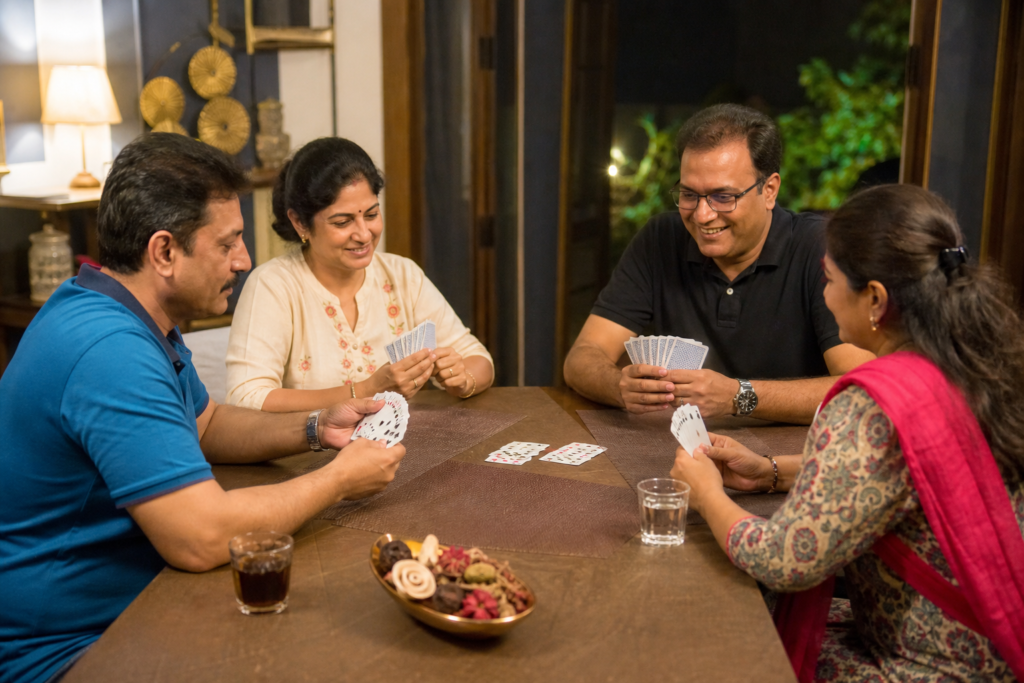
Canasta is rummy scaled for partnerships: two teams, deep melds on the table, a discard pile that can freeze, and the iconic canasta—a meld of seven cards. Born in Uruguay in the 1940s and swept through North America, it still rewards patience, memory, and trust in your partner’s signals.
Classic four-player setup
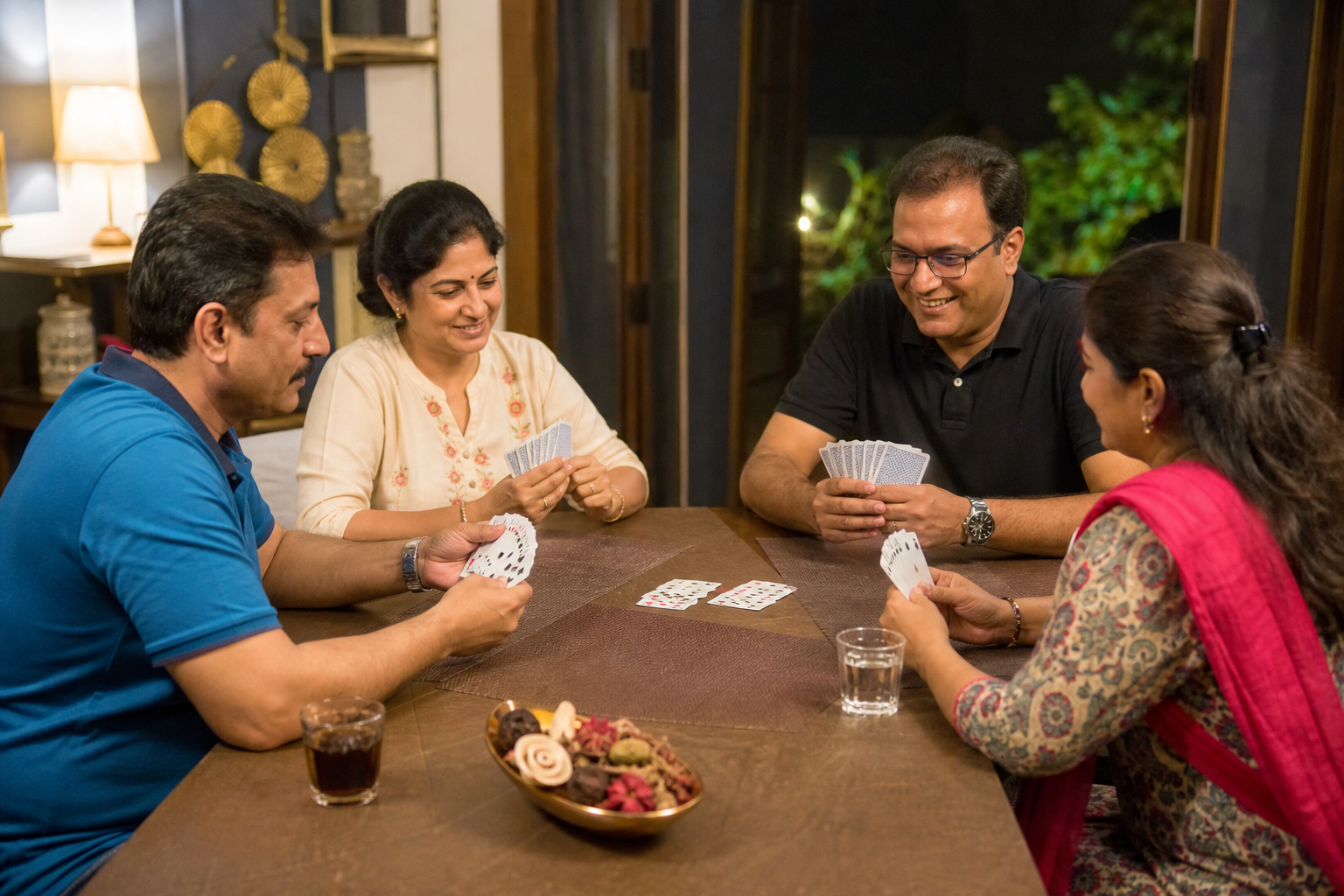
- Players: 4 in fixed partnerships (partners sit opposite)
- Cards: two 52-card decks plus 4 jokers (108 cards)
- Deal: 11 cards each; remainder is stock; turn one card to start the discard (often a messy pile in informal play)
- Wild cards: jokers and twos
Opening meld requirement
Your partnership’s first meld on the table must meet a minimum point total that rises as the game progresses (commonly 50, then 90, then 120 depending on team score). Points count from card values: aces and faces 10, tens through kings as listed in your rule sheet, twos and jokers 50 each when used in melds.
Taking the discard pile
You may take the whole discard pile only if you immediately use the top card in a new meld with two matching natural cards from your hand—or if the pile is not frozen and you meet other local rules. The pile freezes when it contains a wild card or a black three (in classic rules), blocking easy pick-ups.
Canastas and going out
- Natural canasta: seven cards of one rank with no wild cards—usually 500 bonus points
- Mixed canasta: seven cards with up to three wild cards—300 bonus
- Going out: your partnership must have at least one canasta; you meld or discard your last card after asking partner “May I go out?”
Red and black threes
Red threes are bonus cards drawn and replaced; they score plus 100 each at round end. Black threes stop the next player from taking the discard when discarded—tactical stoppers, not melds.
Scoring snapshot
Teams total meld values, canasta bonuses, red threes, and subtract deadwood in opponents’ hands. First to 5,000 (or 3,500 in some books) wins the match. House rules on “samba” (sequence melds) and “hand and foot” (two stacks per player) branch from this core.
For a lighter partnership variant with changing contracts each deal, try Contract Rummy. For two-deck open melds in the Levant, see Lebanese Rummy.