
Card Games for a Long Train Trip with Kids
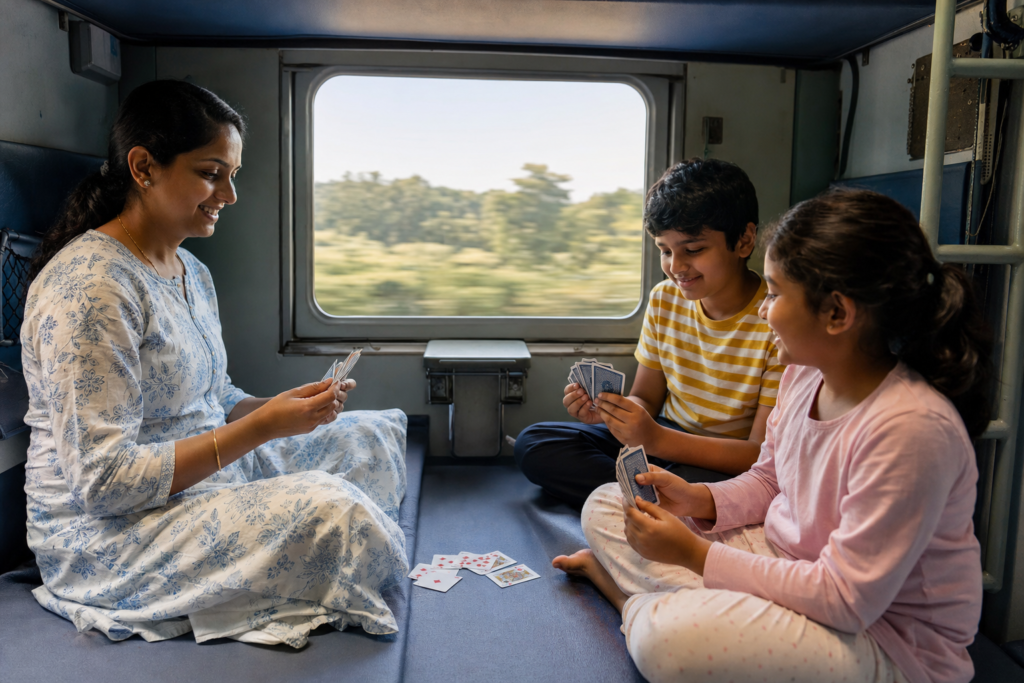
A long train journey with children is a gift of unhurried time—until the scenery blurs and the question arrives: “Are we there yet?” A single deck of cards fits in a side pocket, needs no batteries, and turns a rattling coach into a moving game room. These picks favour quiet play, small space, and rules a six-year-old can learn between stations.
What makes a good train game?
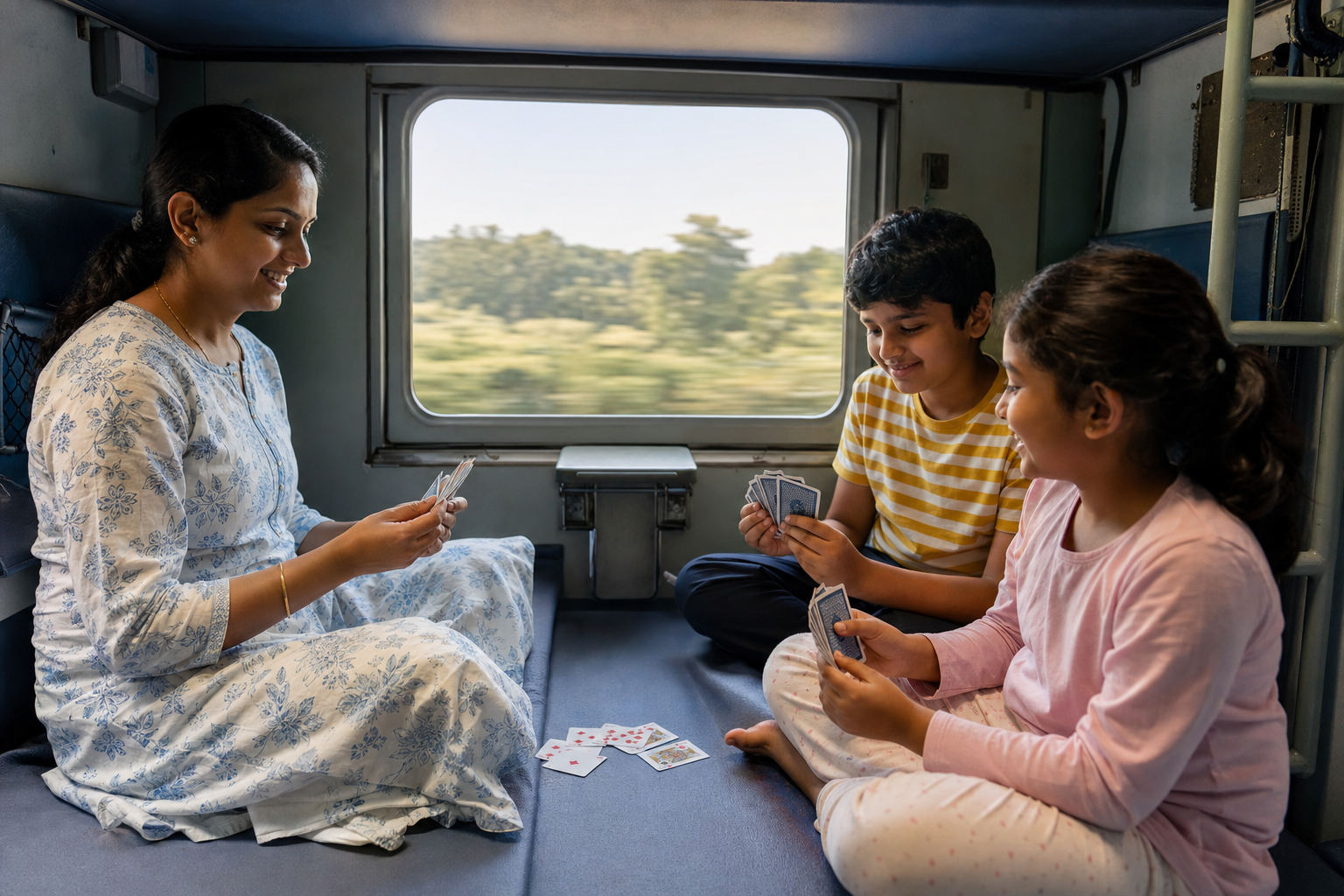
- One deck, many games — fewer things to drop between seats
- Short rounds — pause for meals, naps, or tunnel noise without ruining a long board game
- Low table space — tray tables and laps work; giant spreads do not
- Forgiving rules — when the train lurches, mercy beats strict officiating
- Cooperative options — siblings team up against Mum or Dad to reduce bickering
Stash cards in a small zip pouch with a rubber band. A poker-size deck with a smooth finish—like 575 Playing Cards—is easier for small hands to hold and shuffle in a cramped berth.
Snap (ages 4+)
Deal the pack evenly face-down. Each player flips one card to a centre pile. When two cards match rank, the first to shout Snap! wins the pile. Wrong snap? Give one card to each opponent as a penalty. First to hold all cards wins—or set a timer and count who has most when the next station arrives.
Train tip: whisper “snap” instead of yelling if your coach is quiet; the reflex is the fun part.
Go Fish (ages 5+)
Five cards each (seven for two players). Ask anyone: “Do you have any fours?” If yes, they hand all fours; if no, they say “Go fish” and you draw one card. Collect books of four matching ranks. Most books when the deck runs out wins.
Young children practise memory and polite questions. Older kids enjoy counting what has been asked—light strategy without complexity.
Old Maid (ages 4+)
Remove one queen so another queen is the “old maid.” Deal all cards. Players discard matching pairs face-up. On your turn, fan your cards to the next player; they draw one blindly. When only the old maid remains in one hand, that player loses—and everyone else wins a shared victory if you prefer no single loser on a long trip.
War (ages 5+)
Split the deck. Both flip top cards; higher rank wins both (aces high or low—pick one). Ties mean a war: each player puts three cards face-down and one face-up; higher face-up card takes the lot. First to collect the whole deck wins.
War is pure luck—perfect when kids are tired. For faster play, the loser of a war only gives three cards, not the whole stack.
Crazy Eights (ages 6+)
Deal five cards each (seven for two players). Turn one stock card face-up. Match rank or suit, or play an eight to change the suit. Draw if you cannot play. First to empty their hand wins. Eights are wild suit-changers—hence the name.
One discard pile, little table space, and rounds under ten minutes. A good step toward rummy-style matching later.
Slapjack (ages 6+, with ground rules)
Like Snap, but only jacks make you slap the pile. Agree one hand only and no slapping above the tray table so elbows stay in the family. Wrong slap costs two cards. High energy—save for a less crowded coach or the doorway area between coaches.
Memory / Concentration (ages 3+)
Lay cards face-down in a grid (start with 12–16 cards). Flip two; keep pairs, go again on a match; otherwise turn them back. Fewest turns to clear the grid wins—or play cooperatively and celebrate each pair found.
Use only red suits or only black to shrink the grid for toddlers. Picture decks work, but standard ranks teach numbers and suits for free.
I Doubt It (ages 7+)
Deal all cards. Play goes in order around aces, twos, threes, up to kings, then repeats. On your turn you lay one or more cards face-down and announce the rank (e.g. “two fours”). Others may say I doubt it and flip the cards. Liars take the pile; truthful players give the pile to the doubter. Empty your hand first to win.
Teaches bluffing with a wink—keep voices low so fellow passengers are not drawn into the drama.
Team rummy lite (ages 8+)
Deal six cards each. Form sets (three of a kind) or runs (three in a suit). Draw one, discard one. Parent and child hold one hand together against another pair—cooperative melding cuts arguments. First team to lay all cards wins the deal; play best of three short deals before a nap.
Full 13-card Indian Rummy is better at home; on a train, six cards and no scorepad keeps it light.
No cards? No problem (still on-theme)
- Guess the suit — child picks a card mentally; others ask yes/no questions
- Story suits — each drawn card adds a sentence to a shared story (seven of hearts = seven dragons)
- Train poker faces — who can keep a straight face longest; no cards required
Packing checklist for parents
- One deck per two children (spares arguments over bent cards)
- Small pouch or band to keep the pack together after a jolt
- Wipeable tray or magazine as a playing surface
- Snacks that do not grease fingers—sticky cards stop shuffling
- Screen-time bargain: “one movie, then three card rounds”
Long trains reward slow games and patient hosts. Rotate favourites every hour, let the youngest win a round on purpose once in a while, and when the landscape wins their attention again, tuck the deck away ready for the next “Are we there yet?” For grown-up table nights later, see how to host a poker night or pick up a fresh deck from the shop before your next journey.