
Gin Rummy for Two: Knocking, Deadwood, and Going Gin
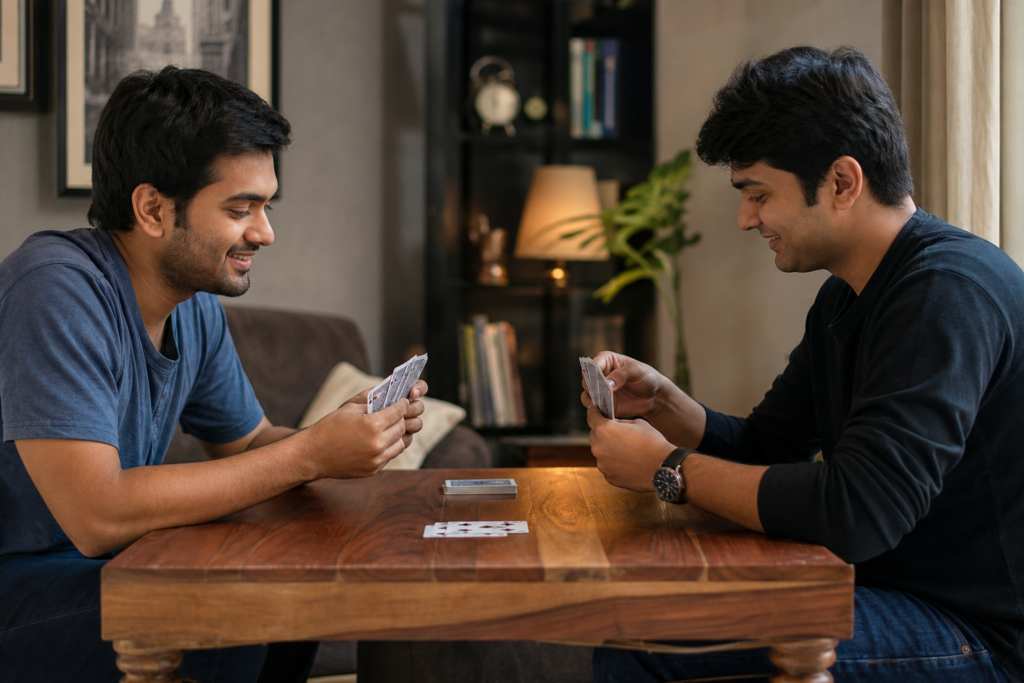
Gin Rummy distills rummy to a tense two-player contest: small hands, hidden melds, and the art of knocking before your opponent completes their layout. Invented in the early 1900s and popularised in America, it remains the default “serious but quick” card game for two.
Setup
- Players: 2 only
- Cards: one standard 52-card deck (no jokers)
- Deal: 10 cards each; turn one card to start the discard pile; stock is face-down
- Goal: form melds and reduce deadwood (unmelded cards) to score points over several hands
Melds and deadwood
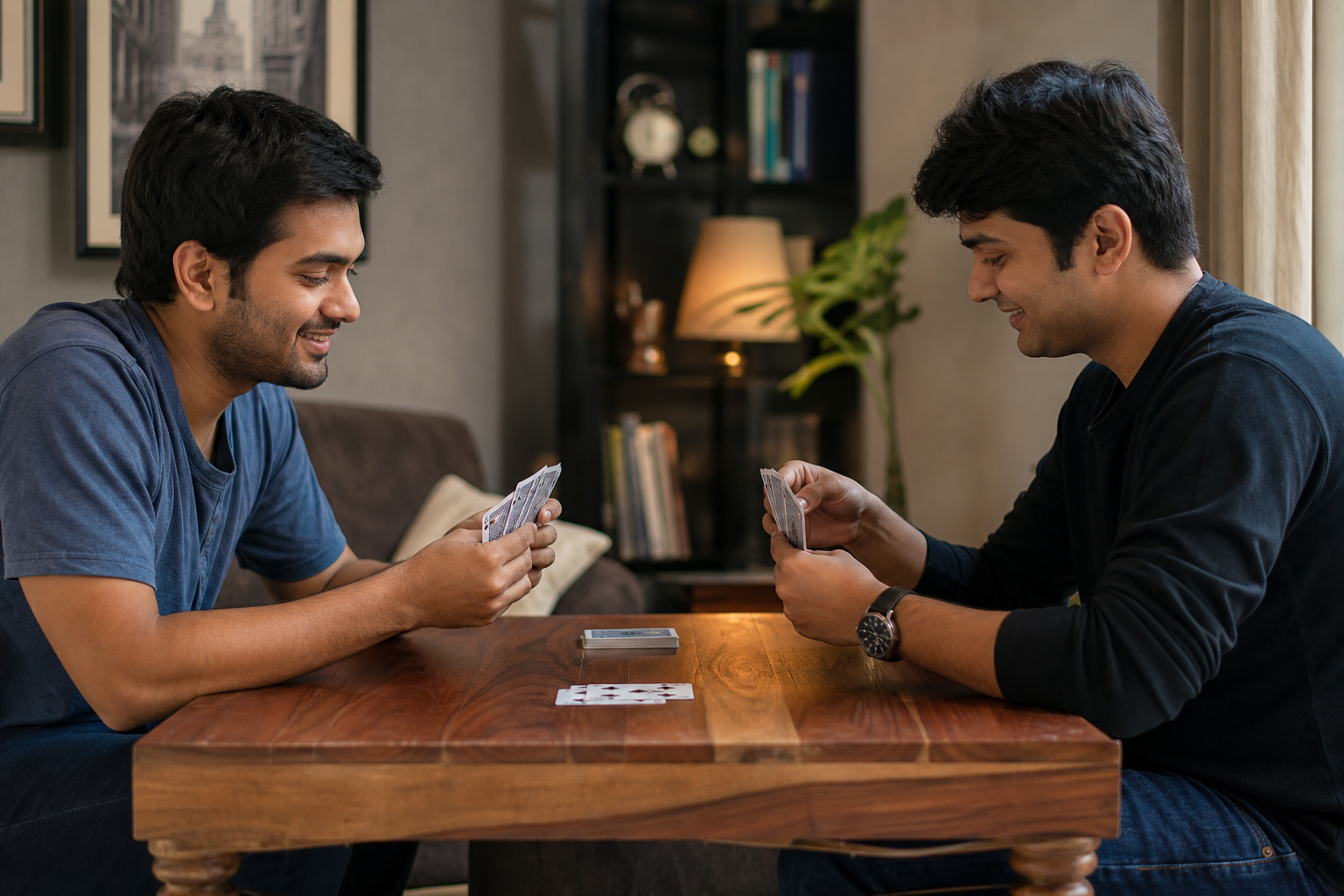
Melds are sets (three or four of a rank) or runs (three or more in suit). Aces are always low (A-2-3, not Q-K-A). Count deadwood by pip value: aces 1, faces 10, others face value. Melded cards score zero against you when an opponent knocks.
Turn flow
- Draw from stock or take the top discard
- Discard one card—you must discard after drawing unless you are ending the hand by knock or gin
Knock, gin, and undercut
- Knock: when your deadwood is 10 or fewer, discard face-down and expose melds; opponent lays off cards onto your melds where legal
- Gin: knock with zero deadwood—you lay all cards in melds; opponent cannot lay off
- Undercut: if opponent’s deadwood after lay-off is less than or equal to yours, they score the difference plus a bonus (often 25)
Scoring a hand
Typical match play to 100:
- Knocker scores opponent’s deadwood minus their own (if not undercut)
- Gin scores opponent’s full deadwood plus 25 bonus
- Undercut bonus: 25 to the defender
- Line bonus or game bonus (100 or 200) for reaching the target first—optional
Oklahoma Gin
In Oklahoma Gin, the first upcard sets the knock threshold: if it is a spade, you may knock with deadwood equal to the card’s value; gin rules otherwise mirror standard gin. It punishes careless discards on the opening turn.
Why gin rewards a good deck
With only 10 cards, shuffle integrity matters—clumped suits from a poor shuffle skew fairness. A single premium deck used only for two-player games stays square longer. For larger rummy variants, see Indian Rummy or Canasta.