
Ways to Engage Your Grandkids with a Pack of Cards
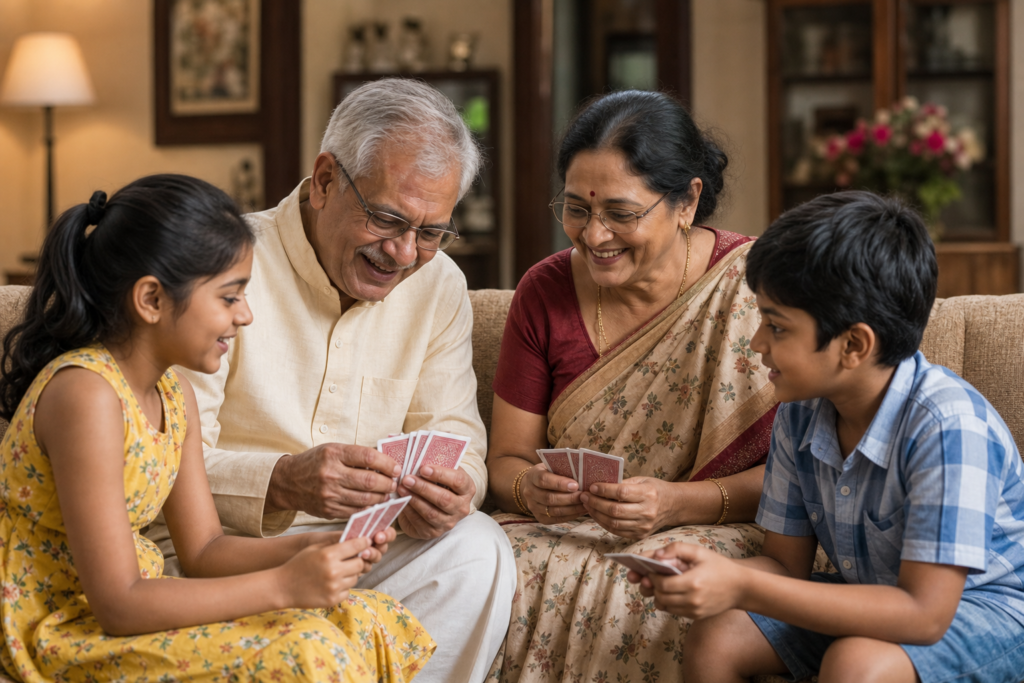
A pack of cards is one of the few toys that never goes out of date—and one of the best bridges between generations. Grandparents bring patience, stories, and unhurried attention; grandchildren bring curiosity and energy. You do not need to be a card sharp: you need a deck that shuffles cleanly, rules scaled to each child’s age, and the willingness to let winning matter less than showing up.
Why cards work so well across ages
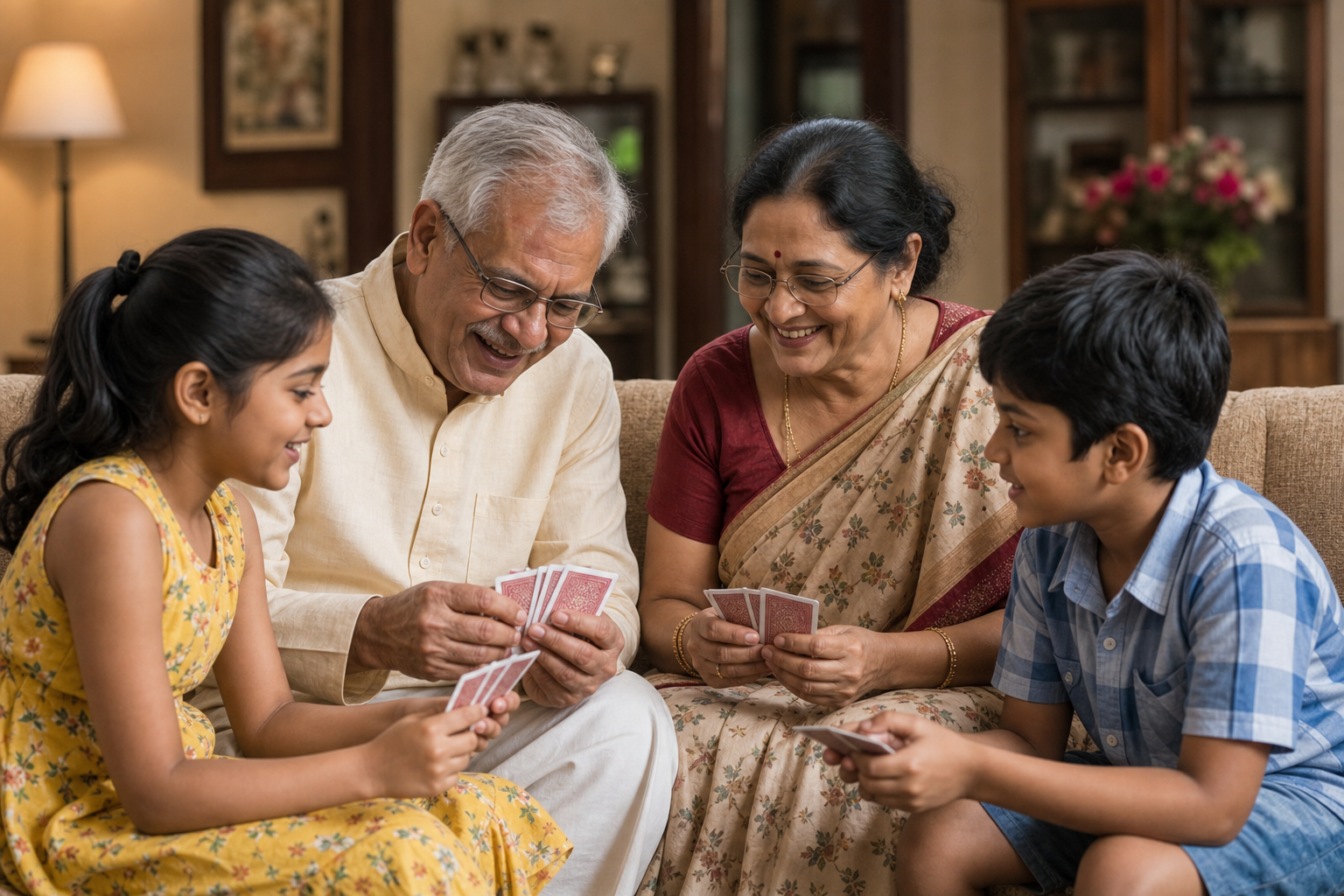
- No screen — eye contact and conversation come back naturally
- Scales up and down — the same deck serves a four-year-old and a fourteen-year-old on different evenings
- Portable — kitchen table, veranda, holiday flat, or hospital waiting room
- Memory-making — “we always played Go Fish at Grandma’s” becomes family folklore
- Skills without homework — numbers, suits, turn-taking, and gracious losing
Keep a dedicated “Grandma’s deck” or “Grandad’s deck” in a drawer—children love objects that belong to a person, not just a house. A sturdy poker-size pack such as 575 Playing Cards survives sticky fingers and repeated shuffling better than a flimsy souvenir set.
Little ones (roughly 3–6)
Sort and match
Spread cards face-up and ask them to group red and black, then hearts, diamonds, clubs, spades, then numbers vs pictures. Praise effort, not speed. This builds familiarity before any rules.
Memory pairs
Lay eight to twelve cards face-down. Flip two; keep pairs, try again on a match. Play together against the clock (“can we find all pairs before the kettle boils?”) so they are not alone under pressure.
Higher or lower
Turn one card face-up. Child draws one card: is it higher or lower? No ties on first visits—draw again on equal. Count how many they guess right in ten turns. Grandparents can ham up dramatic guesses to make them giggle.
Snap (gentle version)
Match ranks on a shared pile; whisper “snap” if noise is an issue. Let them win more than half the rounds early on—confidence first, honesty about rules later.
Primary school (roughly 7–10)
Go Fish
Classic for a reason: asking, remembering, and handling disappointment when someone says “Go fish.” Teach them to fan cards like a book—many children love feeling “grown up” with a proper grip.
Old Maid
Remove one queen; pairs come out; one card remains. Add a silly name for the loser card (“the dusty sock”) so losing feels funny, not shameful.
Crazy Eights
Match suit or rank; eights change suit. Short rounds, clear turns—good training before family rummy later.
Story cards
Draw one card per sentence of a story you build together: “The king of hearts found a five of clubs under the sofa…” Children who resist structured games often love narrative play with no winner.
Tweens and teens (roughly 11+)
Older grandchildren may act too cool for “kids’ games.” Meet them with slightly more skill and social tone:
- Gin Rummy for two — see our gin rummy guide; private melds feel mature
- Knock rummy — simplified rummy: draw, discard, first to lay all cards wins the deal
- I Doubt It — bluffing and reading faces; keep it light, not mean
- Teach one “family” game — a rule set from your own childhood; passing it down matters more than perfection
Let them teach you a phone game once, then bargain for one card game round—reciprocity builds respect both ways.
Rituals that deepen the bond
- Friday deck — same night, same snack, same seat; even monthly visits feel rhythmic
- Tournament cup — a plastic mug “trophy” that returns each visit; engrave winners on masking tape
- Photo of the winning hand — send it to parents; children beam at documented proof
- “Coach grandparent” — one grandparent deals, the other helps the youngest hand openly (no secrets)
- Deck dedication — sign your name lightly inside the box; it becomes an heirloom
When children visit in a group
Mixed ages are trickier than one grandchild. Try a rotation wheel: Game A for ten minutes (Snap), Game B (Go Fish pairs), Game C (story cards). The teen helps the toddler; you keep time and praise helpers. Avoid games where one child is eliminated and sits bored for twenty minutes—cooperative memory or team Go Fish against Grandad keeps everyone in.
For travel days with several grandchildren, see card games on a long train trip for quiet, compact options.
Grandparent habits that help
- Slow down — shuffle once, explain once, repeat without sighing
- Let rules bend — a six-year-old hiding cards is not cheating the family; gently correct
- Celebrate small courtesies — “thank you for dealing,” “good game” matter more than the score
- Stop while they still want more — a short golden ending beats dragging until someone cries
- Fresh decks — bent corners frustrate children; replace cards that mark or stick
Sharing games you grew up with
If you played Lebanese Rummy, Indian 13-card rummy, or bridge at family tables, teach a stripped-down version: fewer cards, no money, partners optional. Name the game after your parent (“Nani’s rummy”) so the child feels tied to ancestry, not just rules.
When they are grown, they may not remember every rule—but they will remember that you made space at the table. That is engagement that lasts longer than any single hand.
Stock a spare deck before the next visit from the 575 shop, or read hosting a poker night when the adult children want their own table after the little ones sleep.