
Playing Cards as a Tool for Learning Basic Arithmetic
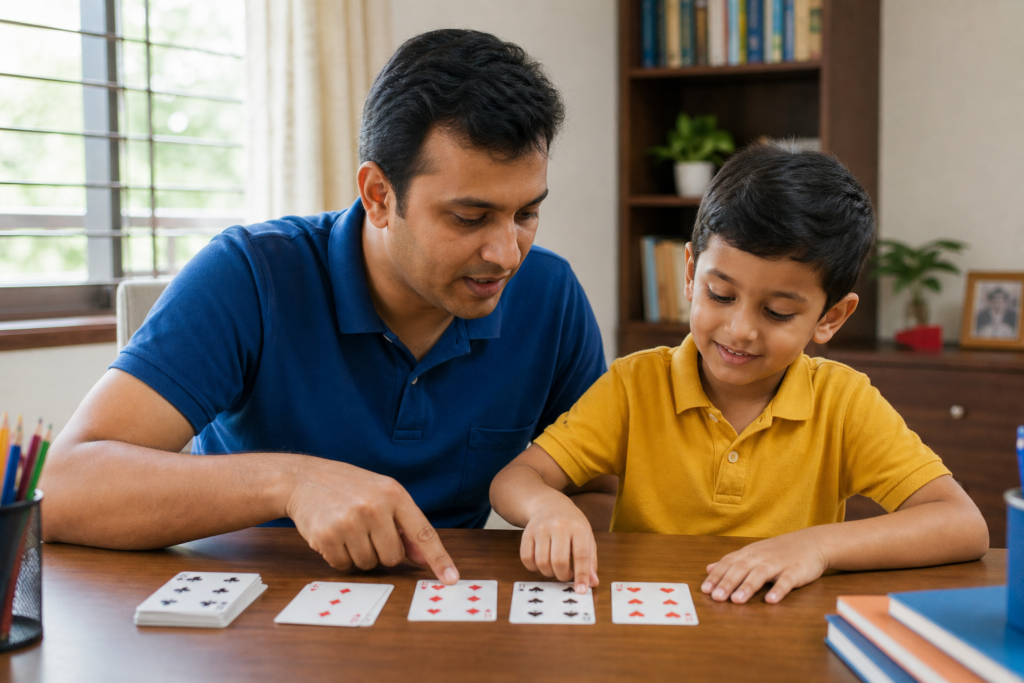
Worksheets drill arithmetic; cards make it stick because numbers move, shuffle, and surprise. A standard deck already maps cleanly to early maths: ace through ten are digits, face cards can stand for ten or zero, and four suits give endless variety without printing another page. Parents, teachers, and grandparents can run these activities in ten minutes with one pack and no special equipment.
Agree on card values first
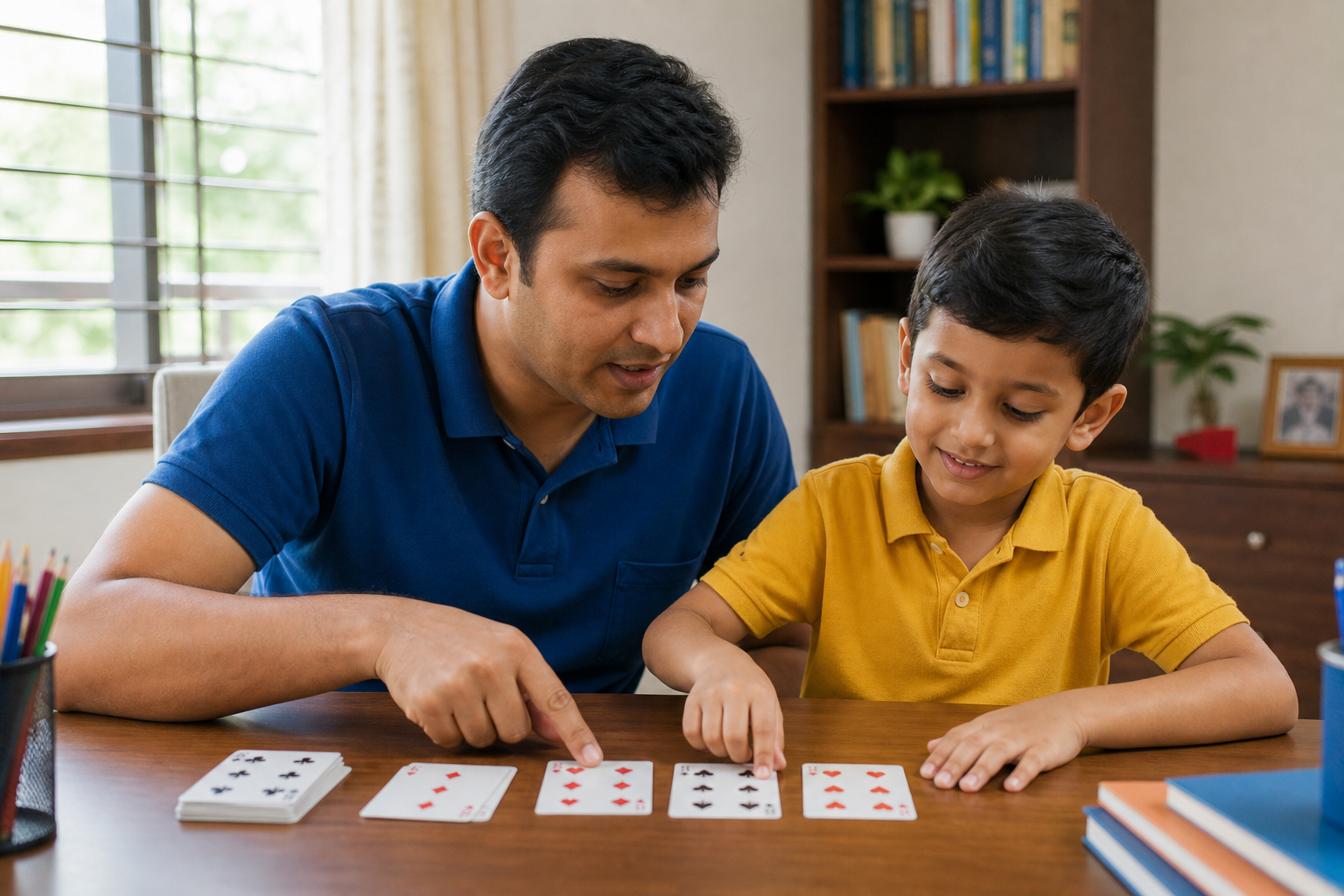
Pick one scheme and keep it for the session so children are not confused mid-game:
- Ace = 1, 2–10 face value
- Jack, Queen, King = 10 each (simplest for adding to 20)
- Alternatively, remove face cards until times tables are solid—ace through ten only
Write the scheme on a sticky note beside the table. A clear, poker-size deck like 575 Playing Cards makes pips easy to count for younger children still bridging from concrete to abstract numbers.
Counting and number recognition (ages 4–6)
Pip count
Turn a card face-up. Child counts pips aloud (hearts and diamonds are symmetrical; clubs and spades need careful pointing). Progress from ace (1) through ten. Mix suits so they learn the number, not one picture shape.
Order the row
Deal ten cards ace–ten of one suit face-up in random order. Child slides them into a line from smallest to largest. Time optional; accuracy first.
More or less?
Flip two cards. Which is bigger? By how many? “Seven is two more than five” links comparison to subtraction early.
Addition (ages 5–8)
Make ten
Lay six cards face-up. Find pairs that sum to 10 (e.g. 7 + 3, 6 + 4, queen + ace if queen = 10). Clear pairs and deal replacements. Classic number-bond practice behind many school curricula.
Snap sum
Each player flips one card. First to call the total of both cards wins the pair. Start with ace–five only; add higher cards as fluency grows.
Target number
Choose a target (e.g. 15). Turn five cards face-up. Child picks two or three that add exactly to 15. Variation: use three cards for harder sums. Wrong totals still get a point for explaining their thinking—process over speed.
Subtraction (ages 6–9)
Difference duel
Two players each flip one card. Find the difference (higher minus lower). First correct answer keeps both cards—or play cooperatively and both win if either solves it. Subtraction as “gap between” not only “take away.”
Count down from ten
Start with ten of hearts face-up. Child draws a card from a small pile (ace–five): subtract its value from the running total. Reach exactly zero before the pile runs out. Teaches bridging through ten without calling it that.
Multiplication (ages 7–10)
Product war
Each player flips two cards. Multiply the values; higher product wins the round (ace = 1, face cards = 10 or remove them). Begin with tables 2, 5, and 10 by restricting the deck to low numbers.
Array builder
Draw 4 × 3: lay four rows of three pip cards (or use suit symbols as markers). Count the total. Connects multiplication to repeated addition before memorising facts.
Times-table snap
Parent calls “6 times 4.” Child flips cards until they produce 24 as a product of two cards (6 and 4) or lay 6 and 4 side by side. Adjust for the table you are practising that week.
Division and fractions (ages 8–11)
Share the pile
Deal 20 cards face-up between two toy “players.” Is each share equal? How many left over? Introduces division with remainders physically—“two left on the table” is clearer than 22 ÷ 4 on paper.
Half the deck
26 cards make a full deck. Ask: what is half of 26? Count to verify. Link to fractions: 13/26 = 1/2. Use one suit (13 cards) to show one quarter of the deck.
Probability peek
What fraction of cards are hearts? (13/52 = 1/4.) Draw ten times, record suits, compare to theory—gentle stats without jargon.
Tips for parents and teachers
- Short sessions — ten focused minutes beat a tired half hour
- One skill per sitting — addition today, multiplication tomorrow
- Let them deal — motor practice and ownership
- No shame for slow counting — finger-counting pips is valid
- End on success — one easy round after a hard one
When they are ready for “real” card games
Arithmetic through cards builds the same skills scoring uses in travel games and games with grandparents. When number bonds are fluent, move to Go Fish, Crazy Eights, and later rummy—play becomes the reward for the maths you practised quietly first.
Keep a spare classroom or kitchen deck from the 575 shop so learning cards stay separate from worn game-night packs—children notice when the tools feel cared for.