
Bridge Cards 101: Rules, Terms, and Why the Deck Matters
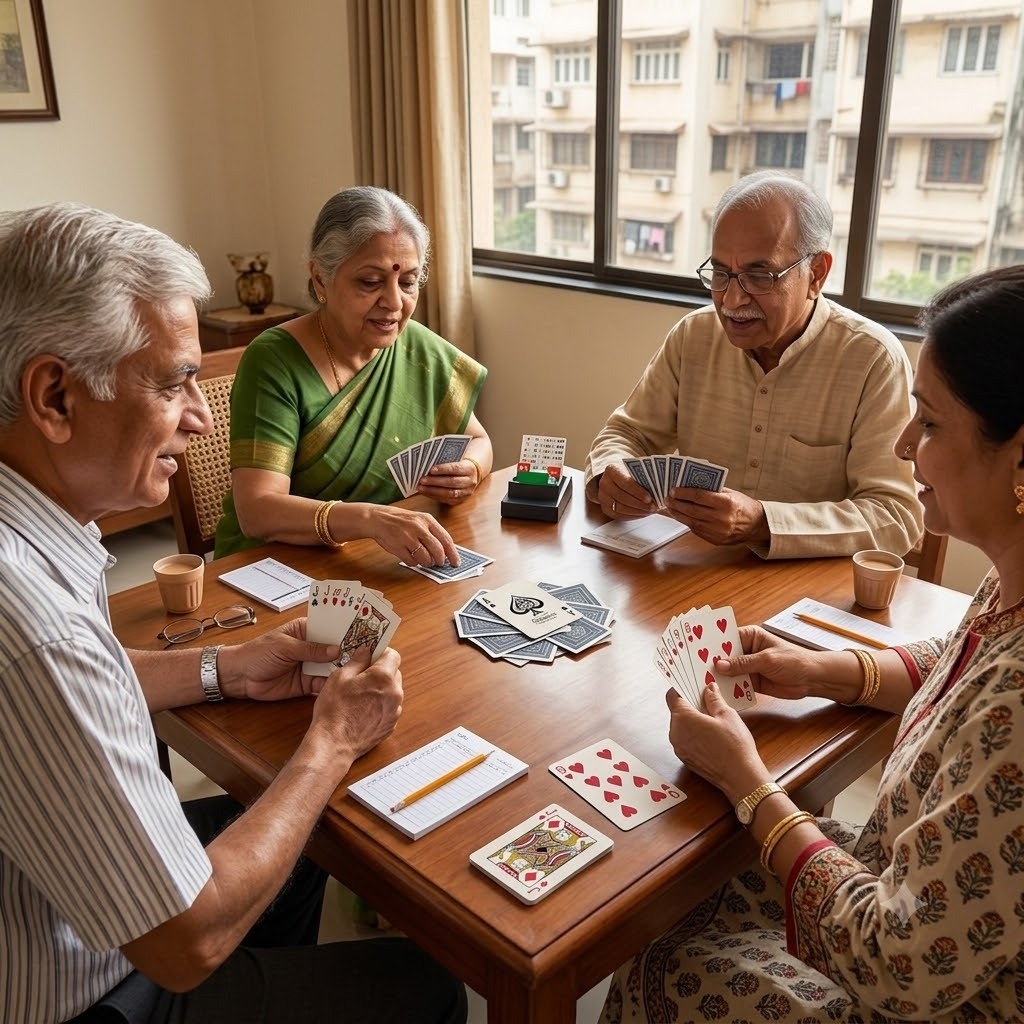
Contract bridge looks intimidating from the doorway—bidding boxes, score pads, words like “vulnerable” and “dummy”—but the core idea is simple: four players in two partnerships try to win tricks after agreeing how high they will aim. A standard 52-card deck is enough to start at the kitchen table. This beginner’s guide covers the terms you will hear first, how a deal flows, how scoring differs between rubber (social) and duplicate bridge, and why bridge-size cards make thirteen-card hands easier to hold than a poker-width pack.
What you need before the first deal
- Four players — two pairs sitting opposite each other (North–South vs East–West)
- One 52-card deck — no jokers; French suits (♠ ♥ ♦ ♣)
- A flat table and a score pad — pencil and paper are fine for rubber bridge
- Optional: a second deck so the next dealer can shuffle while the current hand is played
Each player is dealt 13 cards. That large fan is why bridge decks are cut narrower than poker decks—more on that below, and in our full deck size and index guide.
Essential bridge terms (quick glossary)
- Trick — four cards, one from each player in rotation; the highest card of the suit led wins (unless a trump is played)
- Trump — the suit named in the final contract; beats any non-trump card
- Notrump (NT) — a contract with no trump suit; only the suit led matters
- Contract — the final bid: how many tricks above six the declaring side must take, and in which trump (or NT)
- Declarer — the player who first named the trump suit (or NT) of the final contract; plays both their hand and dummy
- Dummy — declarer’s partner; after the opening lead, dummy’s hand is laid face up and is played by declarer
- Book — the first six tricks; only tricks after book count toward the contract (so “3♥” means nine tricks)
- Vulnerable — a side that has already won a game in the rubber; undertricks and slam bonuses cost or pay more
- Overtrick / undertrick — tricks above or below the number required by the contract
How a hand is played (rubber bridge at home)
Social or rubber bridge is the form most families and clubs teach first. One deal has three phases:
1. The deal
Dealer shuffles, the player on the right cuts, and cards are dealt clockwise one at a time until everyone has 13. Dealer rotates clockwise each hand.
2. The auction (bidding)
Starting with the dealer, each player in turn may Pass, bid higher than the previous bid, Double the opponents’ bid, or Redouble. A legal bid names a level (1–7) and a denomination ranked, low to high: clubs, diamonds, hearts, spades, then notrump. The auction ends after three consecutive passes. The last bid becomes the contract; the partner who first mentioned that denomination becomes declarer.
You do not need a full bidding system on night one. Agree a simple style (for example, opening with a strong suit or balanced hand), keep a cheat sheet nearby, and focus on making or defeating the contract.
3. The play
The player to declarer’s left leads the first card. Dummy then goes face up. Play continues clockwise; you must follow suit if you can. Highest card of the suit led wins the trick unless a trump is played—then the highest trump wins. The winner of each trick leads to the next. After 13 tricks, compare the result to the contract and score.
Scoring basics (enough to keep a rubber)
Only tricks above six score toward game when the contract is made. Approximate trick values below the line:
- Clubs or diamonds: 20 points per trick
- Hearts or spades: 30 points per trick
- Notrump: 40 for the first trick, then 30 for each extra
A side that reaches 100 points below the line wins a game. The first side to win two games wins the rubber and collects a rubber bonus. Overtricks, slam bonuses (12 or 13 tricks), and penalties when a contract fails are scored above the line and do not count toward game—but they decide the final money or honour score. Doubled and redoubled contracts multiply those numbers; vulnerability increases the stakes further.
Memorise the 100-point game target and the suit values first. Fine print (slam bonuses, insult bonuses, honour cards) can wait until the table is comfortable with making 3NT and 4♥/♠.
Rubber (standard) vs duplicate bridge
Both use the same 52-card deck and the same play of tricks. The difference is how results are compared.
- Rubber / Chicago / party bridge: You play the cards you are dealt. Luck of the deal matters. Scoring runs across a rubber or a set number of deals; the stronger partnership usually wins over time, but a run of good hands can swing a night. Ideal for home games and teaching.
- Duplicate bridge: Every table plays the same dealt hands (boards). Your score is compared with other pairs who held your cards. Skill relative to the field matters more than absolute luck. Clubs and tournaments use duplicate; you will see bidding boxes, board trays, and matchpoint or IMP scoring instead of a classic rubber pad.
If you are learning at home, start with rubber or a short Chicago set (four deals with rotating vulnerability). Move to duplicate once bidding and card play feel automatic—and when you want a fairer comparison of skill.
Why the deck matters for bridge
Bridge is a 13-card game. Holding a wide poker-size pack for hours strains wrists and fans unevenly. Purpose-made bridge-size cards are about 57 × 88–89 mm—similar height to poker size, but roughly 6 mm narrower—so the hand sits cleaner in one grip. Clubs and serious home games almost always prefer that cut.
- Size: choose bridge dimensions for contract bridge and other large-hand games; see bridge cards in the shop
- Index: standard or large-index pips help when dummy is across the table; jumbo indices are available if eyesight needs them
- Finish and stock: smooth shuffle, consistent backs, and boards that stay flat through a long session—German board paper such as 575 Premium Bridge for a classic club feel, or plastic when spills and humidity are the bigger risk
- Matching packs: two identical decks (different back colours) let one player shuffle while the other deal is in play—standard club hygiene
- Fair backs: worn or warped cards create accidental tells; retire a deck when corners shine or the pack will not fan evenly (see card care)
You can teach the rules with any complete 52-card pack. Once the household plays weekly, a dedicated bridge deck pays for itself in comfort and cleaner deals.
A simple first-night plan
- Deal a few whist-style hands with a fixed trump so everyone practices following suit and winning tricks
- Add a short auction: only suit bids and pass; ignore doubles at first
- Score one short rubber or four Chicago deals, talking through each result
- Keep a one-page glossary and the trick-value list beside the pad
Bridge rewards patience more than speed. The vocabulary settles after a few evenings; the card play improves for years. When you are ready to outfit the table properly, browse Nylon bridge decks—including 575 Premium Bridge and the 6-pack for club or duplicate nights—and pair them with the size tips in our poker vs bridge vs jumbo guide.