
Choosing the Right Deck Size and Index for Your Game: Poker, Bridge, and Jumbo Explained
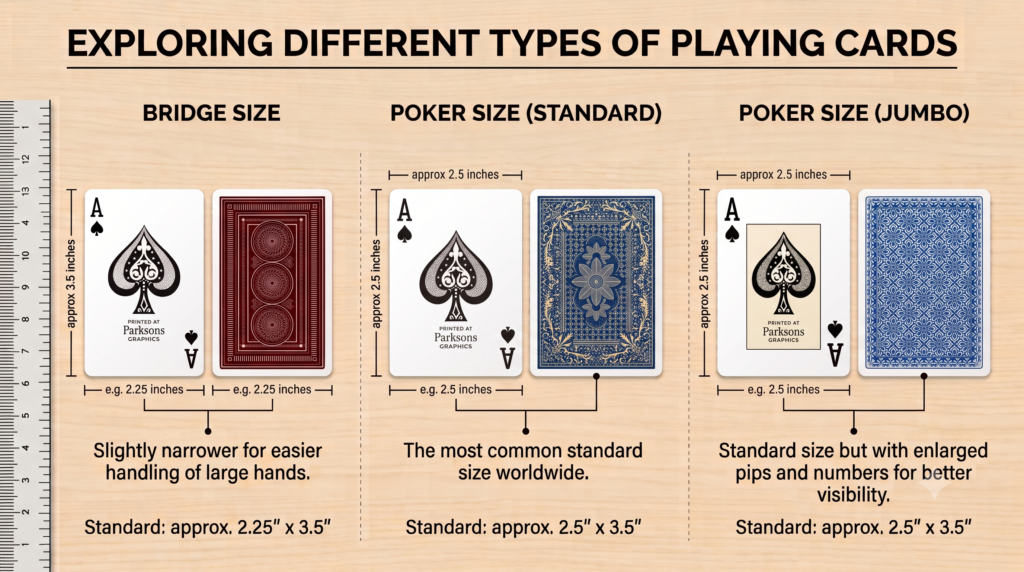
Standing in front of a wall of playing cards, the differences look subtle—until you fan thirteen cards for rummy or squint at corner pips across a poker table. Deck size (poker, bridge, or jumbo) and index size (standard vs large) change how comfortably you hold, read, and shuffle. This guide explains what each format means, which games suit which size, and how to choose before you buy from our shop.
The three measurements that matter
- Card dimensions — width and height of each card (poker vs bridge); jumbo index uses poker-size dimensions
- Index size — how large the rank and suit symbols are in the corners (standard, large-index, or jumbo)
- Caliper and finish — thickness and coating, which affect shuffle feel regardless of size (see German board vs standard board)
Size and index are independent: you can buy bridge-size cards with jumbo indices, or poker-size with standard pips. Match both to your primary game and your eyesight at the table.
Poker size: the default most tables know
Approximate dimensions: 63 × 88 mm (2.5 × 3.5 inches). This is the size of most decks sold for casual play, home poker, and general card games in India and worldwide.
- Best for: Texas Hold’em, Omaha, teen patti, casual rummy, family games like poker night and Speed
- Hand feel: wider face makes each card easier to read when laid on the table; slightly harder to hold very large fan hands than bridge size
- Availability: the broadest range in the poker cards category—paper, nylon, and plastic
If your household already owns poker-size decks for mixed game nights, there is no need to switch for occasional rummy—consistency across games matters more than chasing the “perfect” millimetre.
Bridge size: narrower for bigger hands
Approximate dimensions: 57 × 89 mm—about 6 mm narrower than poker size, with similar height. The slimmer profile lets players fan more cards in one hand with less strain.
- Best for: contract bridge, serious 13-card rummy, canasta, and any game where you hold ten or more cards
- Hand feel: preferred by many rummy regulars and bridge clubs; pairs well with twin packs for multi-deck rummy
- Availability: browse the bridge cards filter for paper and nylon options sized for trick-taking and meld games
Mixing bridge-size and poker-size cards in the same shoe is frustrating—always match dimensions when you combine two decks for rummy or canasta.
Jumbo index: readability over tradition
Jumbo index (sometimes called large index) refers to oversized corner pips and rank symbols—not a different card width. Jumbo-index decks such as Nylon Poker use the same poker-size dimensions (63 × 88 mm); only the face design and larger corner indices change, making ranks easier to read from across the table or for players with low vision.
- Best for: low-light rooms, older players, teaching children suits and ranks, and any table where cards are read face-up at a distance
- Trade-off: larger indices use more corner space—some players find artistic face designs slightly cropped compared to standard index
- Not the same as “jumbo cards” — some retailers sell physically oversized cards (larger than poker size); confirm whether you are buying big indices or big card stock
Quick comparison
- Poker size + standard index — all-rounder for home poker, casual rummy, and family nights
- Bridge size + standard index — rummy, bridge, and large-hand meld games
- Poker or bridge + jumbo index — readability priority; great for intergenerational tables (playing with grandkids)
- Twin packs, matched size — essential for two-deck rummy; buy identical backs from the rummy cards range
Which format for which game?
Poker and betting games
Texas Hold’em, Omaha, and home stud games almost always use poker-size, standard index cards. Players need clear face design for board reads, not a thirteen-card fan. See poker hand rankings and shop poker cards for decks built for repeated shuffles.
Rummy and meld games
Indian 13-card, points rummy, and canasta reward bridge size for hand comfort, or poker size if that is what your table already owns. Prioritise crisp corner indices and two matching decks. Our best cards for rummy guide covers material and twin packs in depth.
Bridge and trick-taking
Club bridge expects bridge-size cards—narrow enough to hold thirteen tricks comfortably. Premium paper on German board (see plastic vs paper) is common at serious tables. Start with the bridge cards collection.
Family and children
For mixed-age game nights—beyond rummy and poker—poker size with jumbo index helps younger players learn ranks. Nylon or plastic decks survive spills; see travel games for compact play.
Buying checklist
- Name your primary game — poker, rummy, or bridge — and pick size accordingly
- Check index photos on the product page; “large index” and “jumbo” should show corner pip size clearly
- Buy two identical decks if you play multi-deck rummy or canasta
- Match material to use — weekly games deserve nylon or plastic; occasional play suits quality paper
- Replace when marked — a bent corner or shiny back defeats the purpose of careful size choice
Our recommendation
575 Playing Cards offers poker, bridge, and rummy-oriented decks with consistent caliper and clear indices—so when you move from a poker night to a rummy afternoon, the cards feel familiar in the hand even when dimensions change. Start with one deck in the size your table plays most; add a matched twin pack when you graduate to two-deck games.
The right deck size is the one nobody mentions mid-game—because hands fan easily, indices read at a glance, and the argument is about the discard, not the cardboard.