
Plastic vs Paper Playing Cards: Premium Feel vs Waterproof Value
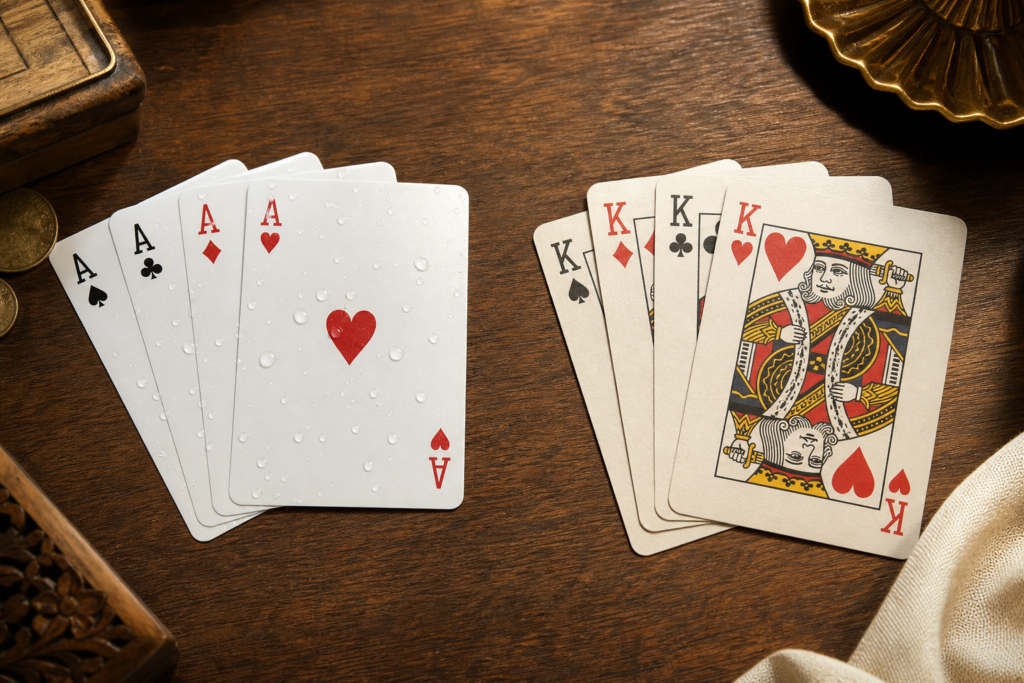
Plastic or paper? The wrong way to frame it is “cheap versus premium.” At 575, our bridge premium paper cards sit at a higher price than nylon plastic decks—and that is deliberate. Paper delivers a richer feel; plastic delivers waterproof durability and a lower cost per month of play. The real question is what you value at your table, and whether you want a material that forces you to pick one side or a stock that combines both advantages.
Paper playing cards: premium feel, premium price
Quality paper cards use layered cardstock—often with linen or air-cushion embossing—that players describe as snap, slide, and authenticity. 575 Premium bridge cards on German board stock sit at the top of that experience: better flexibility, perfect stiffness, and a shuffle that serious bridge and rummy players notice immediately.
- Pros: the most natural fan and deal, superb print depth on faces, preferred by players who grew up on paper
- Cons: not waterproof; absorb moisture and oils; fair-life is shorter than plastic even on premium stock
- Price reality: premium paper costs more upfront than nylon plastic—and because paper decks retire sooner, the cost per year of play often works out slightly higher
- Best for: indoor tables, players who prioritise feel over longevity, bridge nights, and hosts who want the most prestigious deck on the felt
Plastic and nylon cards: waterproof and economical over time
575 Nylon Playing Cards are plastic-composite decks built for repetition. They are waterproof, wipe clean after spills, and keep their shape through heavy riffle shuffles and long tournament nights. The ticket price is lower than our premium paper bridge line—and the gap widens when you divide cost by months of use.
- Pros: waterproof and washable, far longer lifespan, consistent stiffness month after month, ideal for food, drink, and outdoor tables
- Cons: a slightly different slide than paper—most players adjust in one session; not the same “classic” hand-feel purists chase
- Price reality: lower purchase price and longer life—plastic is the economical choice when you measure rupees per game night
- Best for: weekly poker, monsoon-season rummy, teaching kids, and any table where drinks are within arm’s reach
Head-to-head on what players notice
- Upfront price: 575 Premium paper > 575 Nylon plastic—not the other way around
- Cost over a year: plastic usually wins; premium paper is shorter-lived, so lifetime cost per deal trends higher
- Shuffle and deal: premium paper fans beautifully; nylon keeps a predictable slide far longer
- Humidity: paper swells in damp air; plastic stays playable on a terrace or during rainy season
- Spills: plastic survives; paper is done after a serious soak unless you act instantly
- Marked cards: rotate either type when corners shine or backs pick up tells
575 Premium: the best of both worlds
That is why 575 Premium exists—not as a budget paper line, but as the bridge between categories. It uses German board stock so you keep the premium paper feel serious players want, while the flexibility, stiffness, and longevity of that stock outlast ordinary paper by a wide margin. You get paper’s dignity with more of plastic’s staying power, without giving up the hand-feel that makes people reach for a paper deck in the first place.
In short: nylon plastic is waterproof and cheaper over the long run; standard paper feels good but fades fast; 575 Premium on German board is the blend—more premium and longer lasting, so you are not forced to trade feel for durability or vice versa.
Quick chooser’s guide
- Choose 575 Premium paper when feel is paramount, you play indoors, and you want German board’s shuffle and stiffness advantages over standard cardstock
- Choose 575 Nylon plastic when waterproof durability and the lowest cost per month of play matter most
- Keep both if you host mixed crowds: premium paper for the formal bridge table, nylon for the weekly poker rotation
- Replace either when corners shine, backs delaminate, or a card fails the “readable from the back” test—fair play always comes first
Neither material cheats for you. The honest split is simple: plastic is waterproof and wins on lifetime value; paper is more premium in the hand but shorter-lived on standard stock. 575 Premium is our answer when you refuse to choose—and want both qualities in one deck.